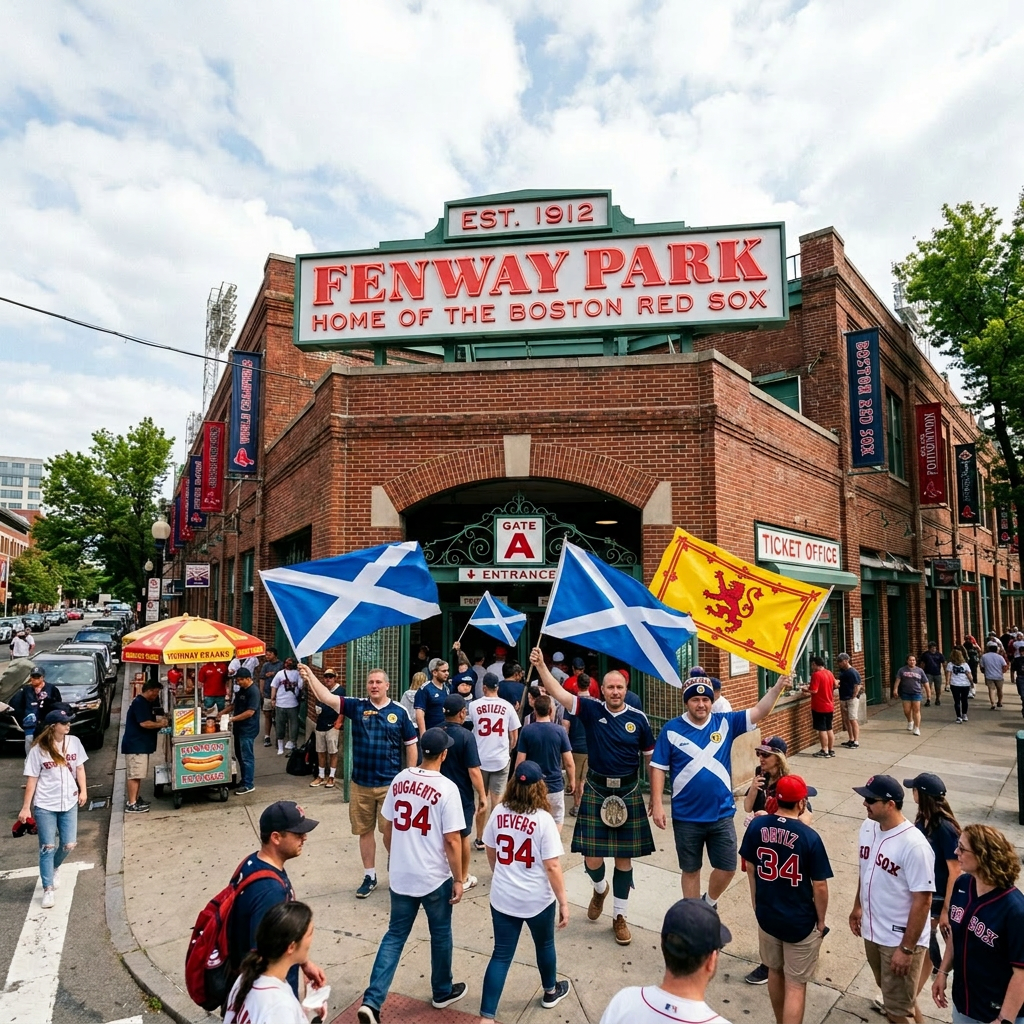
On June 14, 2026, thousands of Scottish soccer fans turned Fenway Park into one of the most unique environments in baseball. Just one day after Scotland’s World Cup victory over Haiti, the city’s famous ballpark became the center of a massive cultural celebration that showed how major sporting events can create business opportunities far beyond the game itself.
The event’s success was not necessarily due to Fenway Park drawing more fans than usual, but to its attracting a completely different type of crowd. Scotland’s passionate supporters (the “Tartan Army”) are famous for traveling in large numbers and creating energetic atmospheres wherever they go. Thousands of those fans attended the game, bringing chants, singing, and a level of excitement that is often uncommon at a regular Major League Baseball game. The event was a unique experience that helped the organization stand out during one of the busiest sports summers in recent history.
The Impact of the Tartan Army
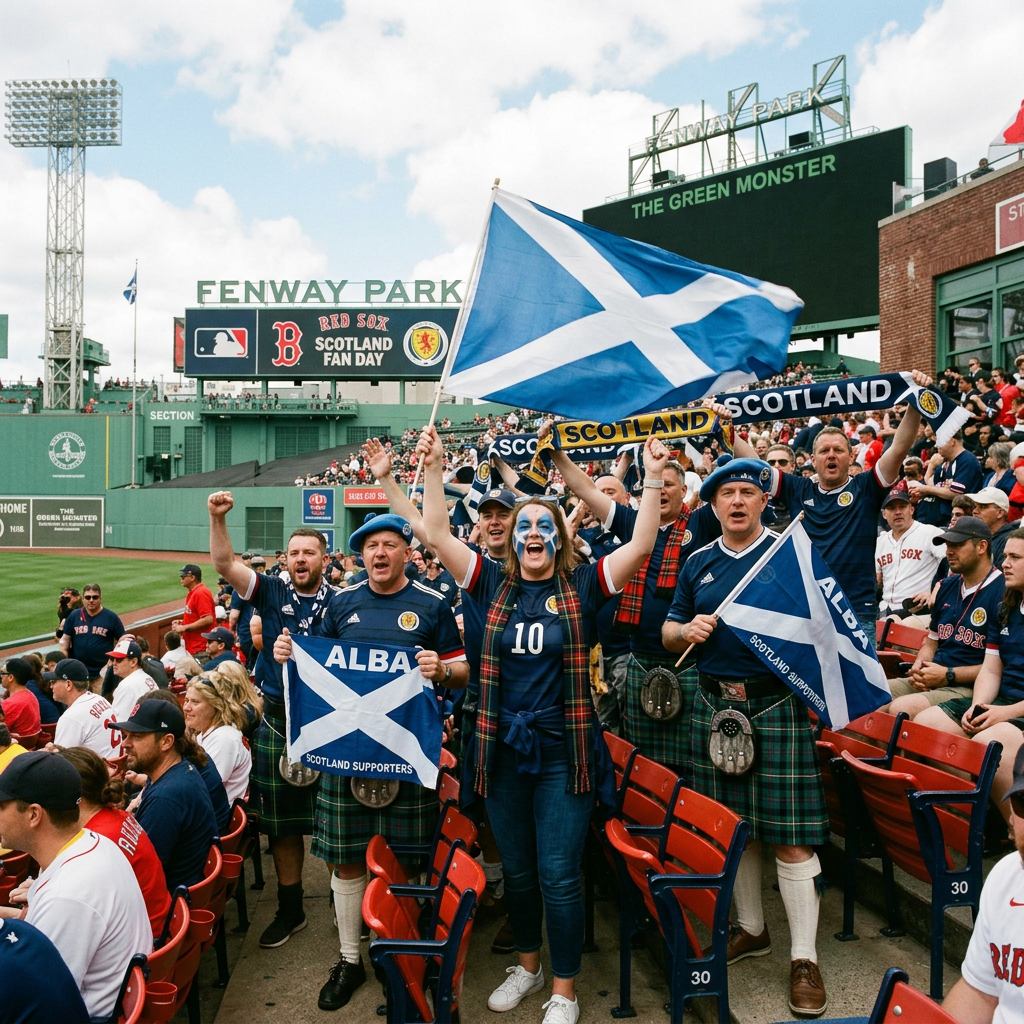
Scots have always been alwasys been known as some of the most passionate sports fans in the world. Their famous nickname was coined by English journalists in the 1970’s because of the large numbers of supporters who traveled to matches while wearing Scotland’s national colors. They became globally recognized starting with the 1978 FIFA World Cup in Argentina, and have since become known for taking over stadiums across soccer, rugby, and now even baseball. Thousands of them showed up in Boston’s “Scotland Celebration” to continue showing their nationalism after the soccer game, and brought with them energy that Red Sox fans are not used to seeing.
They started by marching to the stadium with the tartans playing the infamous “Scotland the Brave” on bagpipes. During the game, they sang their iconic “Super John McGinn” chant and sang along loudly with the songs played by the stadium. The Scottish fans who sat in one part of the building completely took over the stadium, putting everyone on notice. One of the most common criticisms of American baseball is that the atmosphere can feel quiet compared to other sports. The Tartan Army showed that a baseball game can become a much more energetic experience when fans are fully engaged.
How the Red Sox Capitalized on the World Cup
The FIFA World Cup is the largest sporting event in the world, drawing millions of traveling supporters every four years. With Scotland scheduled to play Haiti at Gillette Stadium just one day before the Red Sox hosted the Rangers, Boston had a unique opportunity to attract thousands of international visitors who were already in the city. Rather than treating it as an ordinary game day, the Red Sox created a special “Scottish Celebration” and positioned Fenway Park as another stop on the World Cup experience.
The promotion proved to be a smart example of event-based sports marketing. Fans who purchased a special ticket package received an exclusive Red Sox jersey featuring Scottish-inspired designs, creating a unique souvenir tied to both Boston and Scotland. The organization also embraced the supporters’ traditions by coordinating pregame festivities and welcoming the Tartan Army into the Fenway atmosphere. By connecting their brand to a major international event, the Red Sox generated additional publicity, increased fan engagement, and created a memorable experience that extended beyond the baseball game itself.
Lessons for Sports Marketing Teams
The success of this event shows that sports organizations should always look for opportunities outside of their own sport. The Red Sox could have treated June 14 like any other regular season game, but instead they recognized that thousands of Scottish soccer fans were already in Boston and found a way to bring them to Fenway Park. By connecting their game to the World Cup, they created additional interest, generated publicity, and introduced many international visitors to the Red Sox brand.
More importantly, this event proved that fans remember experiences, not just results. Most people who attended will probably remember the bagpipes, chants, and atmosphere long after they forget the final score. In an increasingly competitive sports industry, creating memorable experiences is one of the best ways to keep fans engaged. The Red Sox turned an ordinary baseball game into a unique cultural event, and in the process showed how creative marketing can make a sporting event much bigger than the game itself.

Leave a Reply