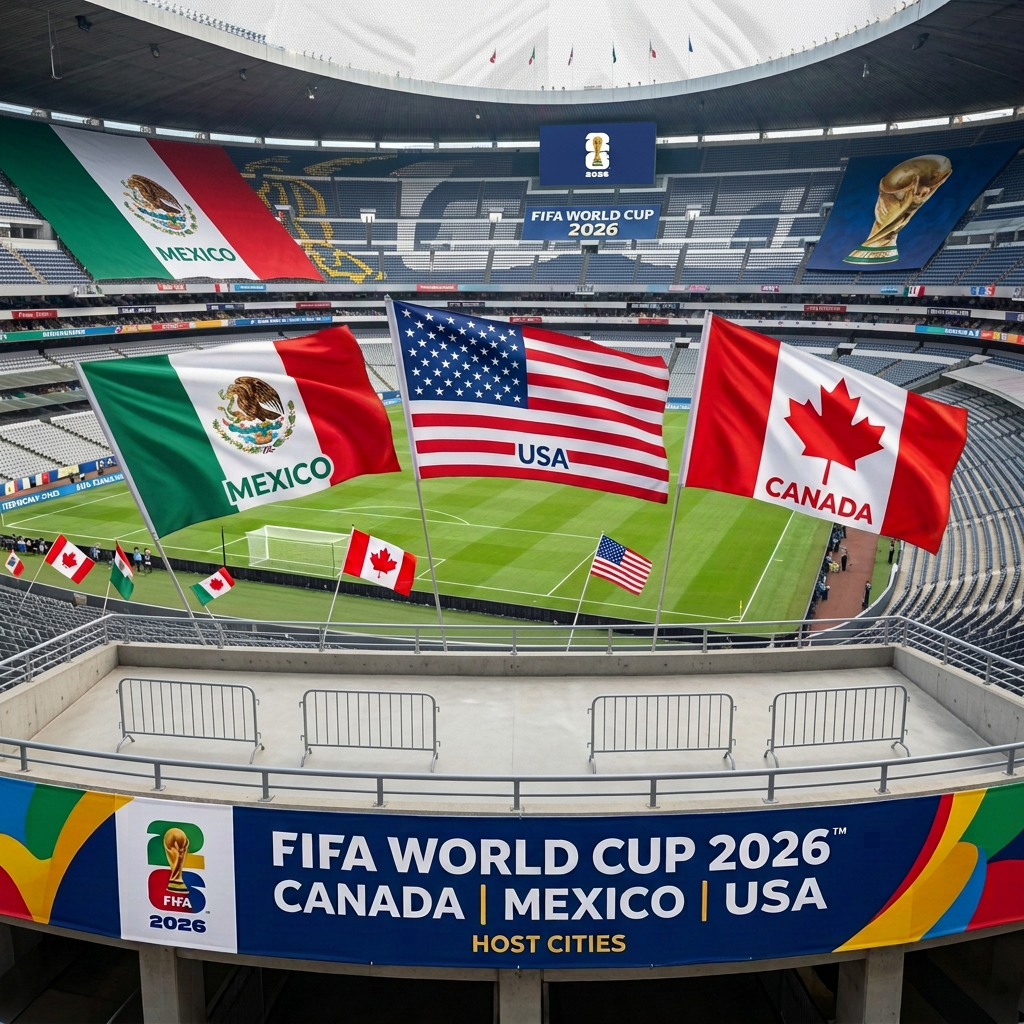
Every 4 years, the biggest sports tournament in the world — the FIFA World Cup — captivates fans from all around the world to watch soccer. While the event is usually held in a different country each time, this one was uniquely held in Mexico, Canada, and the United States to accommodate the first time that there have ever been 48 competing teams, the most ever.
While fans focused on the amazing matches and dramatic moments, host cities focused on being ready for guests and on taking advantage of great business opportunities. There were millions of visitors, businesses welcomed a surge of customers, and FIFA generated record-breaking revenue through ticket sales, sponsorships, and broadcasting rights.
The Biggest World Cup Ever
In the past, the World Cup featured 32 nations, while this year’s tournament expands to include 16 more teams. As a result, the precedent-setting 64 matches were expanded to 104. This was also the first time there have been 3 host countries and 16 host cities. This growth has been great for the hosts because an increase in teams results in more fans traveling.
Alongside this, there is a positive relationship between an increase in games and ticket sales, TV broadcasts, sponsors, hotels, restaurants, merchandise, etc. According to Philip Buckingham of The New York Times, FIFA predicts that the tournament’s revenue will exceed $10 billion, nearly doubling the previous record, the 2022 World Cup, at about $5 billion. The expansion was more than simply adding more nations; it fundamentally changed the tournament’s business potential.
Impact on the Economy
Many cities wanted to host matches because they knew the large impact of all the tourism. For instance, many hotels had much higher revenues during the tournament. Although many cities reported decreased occupancy, the average daily rates spiked. It was an inconvenience for many visitors who had to pay much more than usual visitors; this acted as a balance to the decreases in room prices to fill rooms after FIFA overestimated how many rooms they would need.
Alongside this, the restaurant business was another industry that benefited greatly from the boosted tourism. For example, restaurants in LA saw a 12% increase in revenue. Locals stayed away mostly to avoid the lines, but the soccer fans filled in.
Airports did not appreciate the attention as much because they became overcrowded and backed up. However, smaller regional airports see much more profit from private jet and charter flight reservations.
Transportation saw a huge increase in travelers in Mexico, Canada, and the United States. There were extremely high demands, but cities compensated by creating new lanes, establishing new pedestrian zones, or even investing in transportation efficiency in some cases.
These are just a few of the many industries that were vastly helped by the influx of people that the World Cup brought. This is why so many countries hope to host the World Cup every 4 years.
Inside the Ticket Msrket
With this being the biggest World Cup ever, there was also more demand and many more tickets to sell. FIFA varied prices drastically based on match importance, team quality, and seat location. However, tickets were released through early lotteries at lower prices, but ticket prices increased progressively with later releases. The more affordable seats were reserved for host-nation residents, allowing them to enjoy the games at a more reasonable cost.
FIFA also provided luxury hospitality packages such as trophy lounges by the sidelines and even pitchside lounges with direct proximity to the players and gourmet dining. While most fans could not afford these experiences, many businesses and wealthy individuals spent thousands on them each game, with Chris Gardner of The Hollywood Reporter reporting that a $4 million package was sold for the final.
The resale market was another large factor in this tournament’s economy, with tickets appearing on resale sites immediately. Many fans also resold their personal tickets to fans who needed them. Because of this, many people bought their tickets at a much higher price than originally listed.
These ticket sales were not just about filling the stadiums; they were one of the largest revenue streams for FIFA. The millions of tickets sold also meant millions more people contributing to the host nations’ economies.
When the Hosts Fell Short
While hosting the FIFA World Cup greatly benefited the host countries, they were not as successful in the actual soccer. Mexico, Canada, and the United States were eliminated before the quarterfinals.
This disappointment had economic effects as well, including a decline in tourism. During matches, visitor spending was extremely high, but casual tourists stayed away to avoid crowds and high prices, and this trend persisted after the losses.
Local bars and restaurants also saw an immediate drop in revenue because many tourists left, and casual fans lost emotional investment. Local TV ratings also dropped sharply; there were far fewer viewers of games on FOX and Telemundo following losses in Canada, the United States, and Mexico. Cities lucky enough to host matches towards the end of the tournament still saw a lot of spending and tourism gladly, but a host nation’s elimination generally does more harm than good.
Was it Worth It?
Over the course of the 104 matches, there was an all-time high of 6,810,966 fans. With this, billions were made in revenue for FIFA, with a lot of profit for host cities. There were some downsides because so much money was spent on hosting costs like security, infrastructure improvements, transportation, etc. Many economists argue that mega-events don’t always deliver long-term economic benefits.
However, the tournament leaves behind a lot, even after it ends. There is improved infrastructure, greater interest in soccer across North America, and it can act as the blueprint for future World Cups because FIFA plans to do it similarly in 2030 across multiple countries.
The expansion was definitely risky, but ultimately, it was a huge success. Financially, it became by far the biggest World Cup ever. Not only was the 2026 World Cup the biggest tournament in history, but it also showed how sports can unite billions of people while driving one of the largest business operations on the planet.

Leave a Reply